I remember a habit I used to have and then grew out of: I would collect flowers and leaves and press between the pages of books, and then photograph them before they faded completely. And I have an even more vivid memory of how surprised I was whenever I came across them years later, still preserved and long forgotten inside a book. Perhaps they’re still there even now, waiting. I don’t think it was the actual flower itself I was trying to preserve, but the feeling I had when I looked at it, the experience of its beauty, of the emotion I wanted to capture, freeze or press, and turn into something lasting. And this exhibition dwells precisely in that desire to preserve the moment.
Que mi deseo me sirva (May My Desire Serve Me) is grounded in a working method in which, following prior observation, Sandra Mar creates a kind of diary, a notebook for recording sensations which gradually accumulates fragments of experience, the memory of a body no longer within reach, the texture of a skin, a hand caressing another that now exists only in language, the position of lips as they kiss. Writing almost becomes a ritual, a way of holding on to beauty, with the certainty and frustration of knowing that it is impossible.
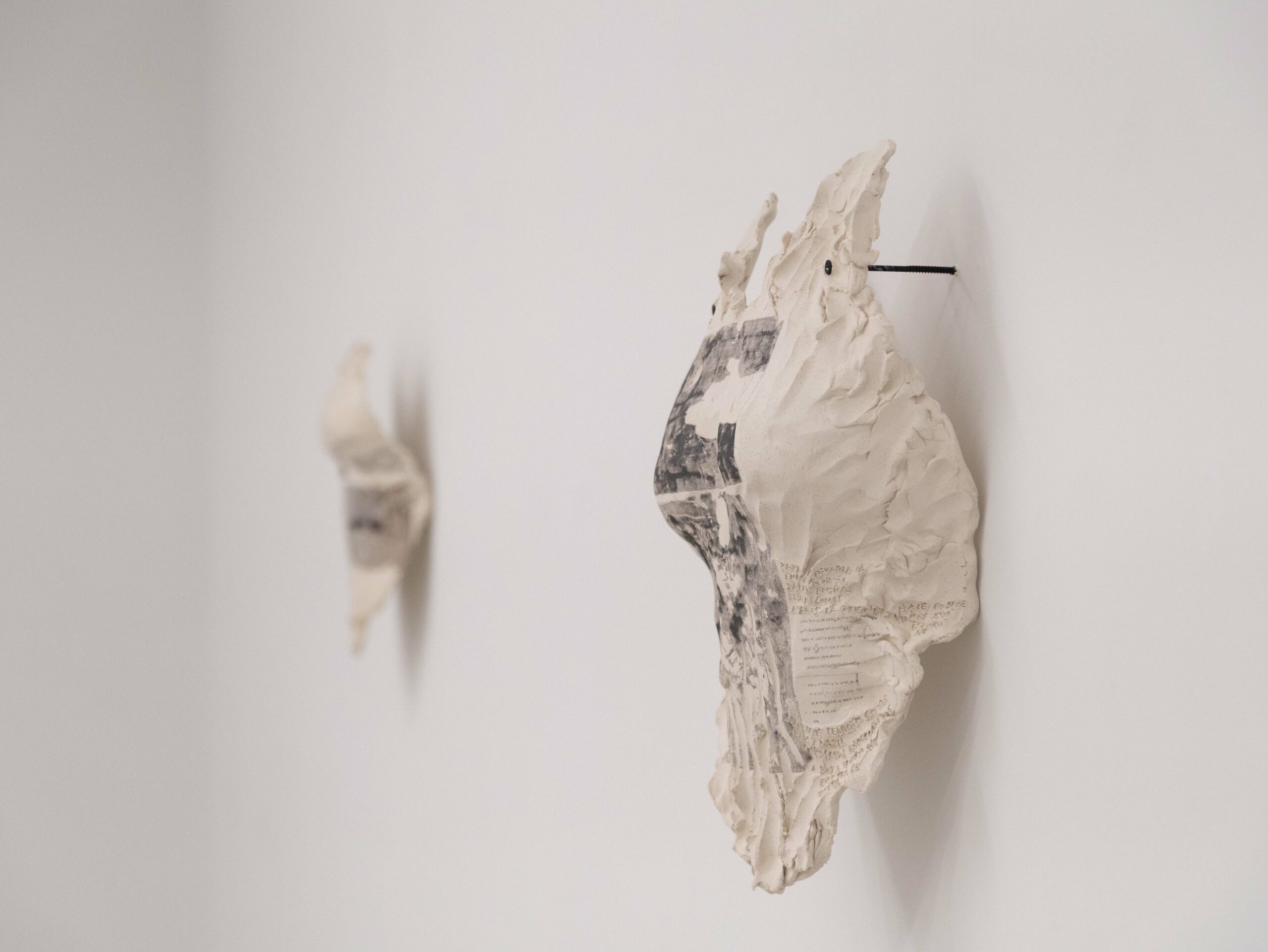
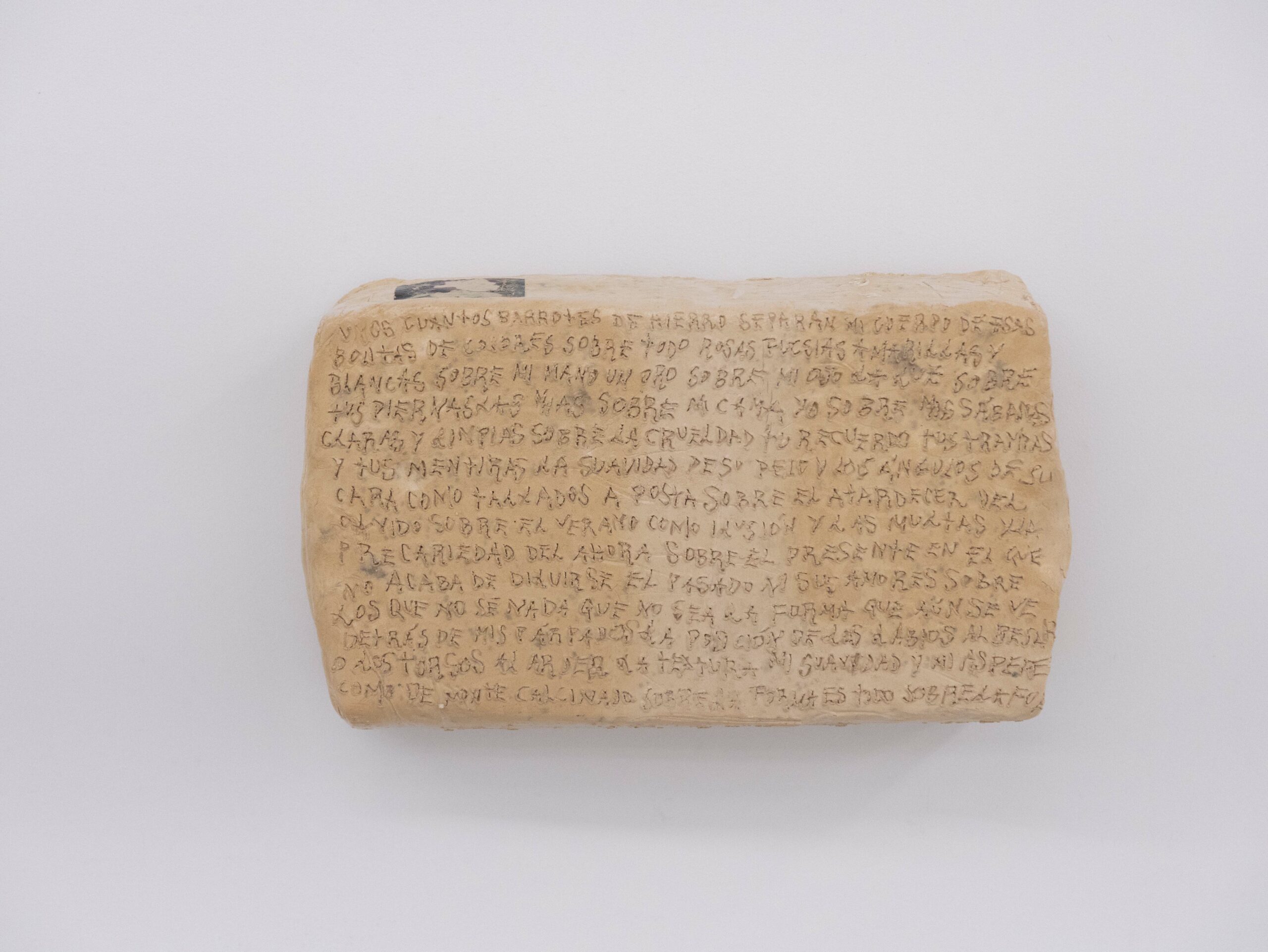
This impulse to name what vanishes provides Sandra Mar with the initial template for her practice, but she also needs another vehicle, a material in which to imbue the memory of that experience and make it tangible. Something that can be understood physically, not just through the memory carried by words. That vehicle is her sculptural practice, which here, in this exhibition, ventures into new ways of artmaking. She leaves behind the vessels, vases and bowls that until now had served as supports for her incised writing, and turns her focus to pieces that no longer contain but instead unfold and fan out, curve and coil around themselves, or simply rest, as if the material had decided to stop serving a purpose and to start speaking a language of its own, closer to the gesture than to the functional object.
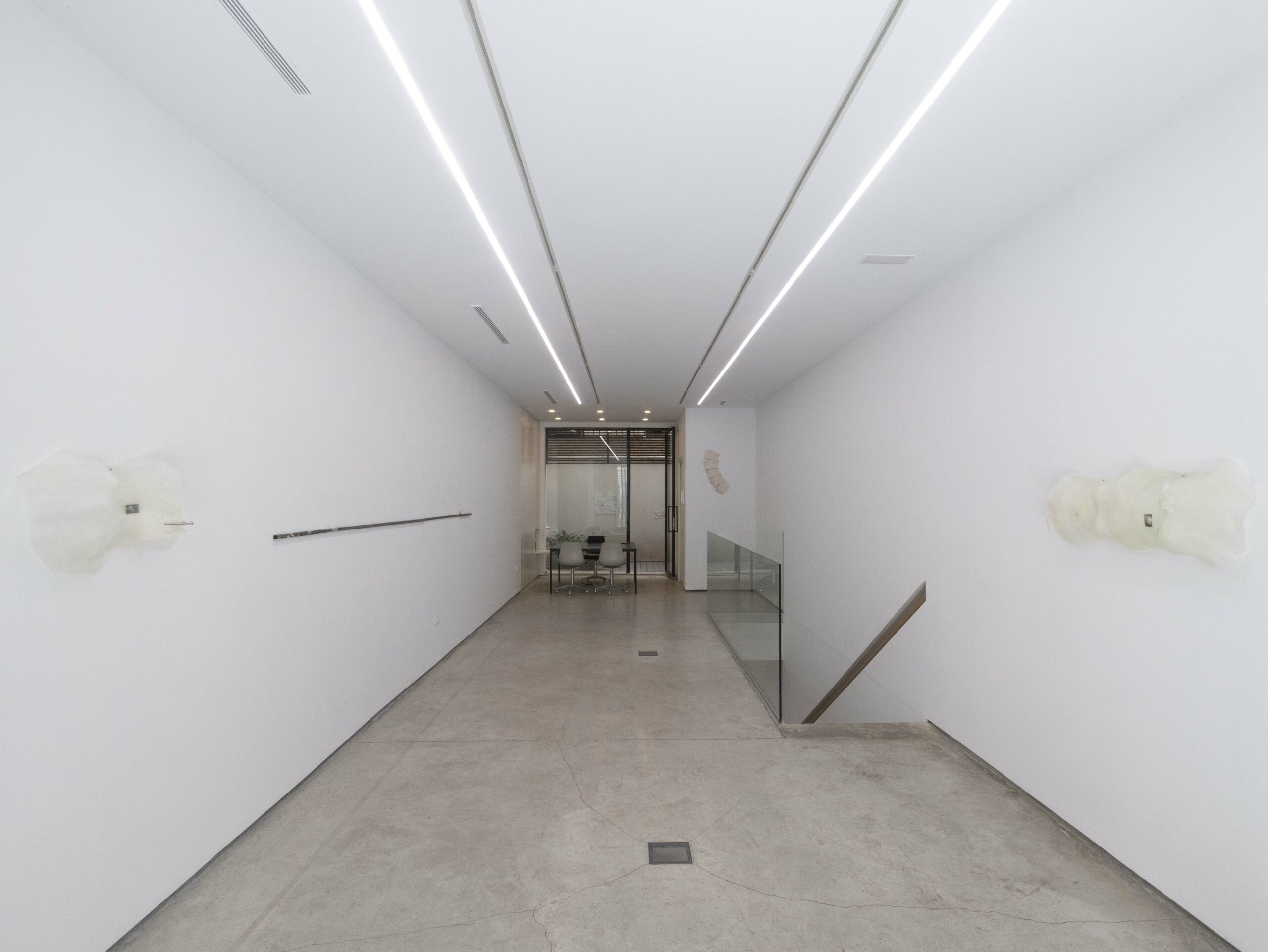
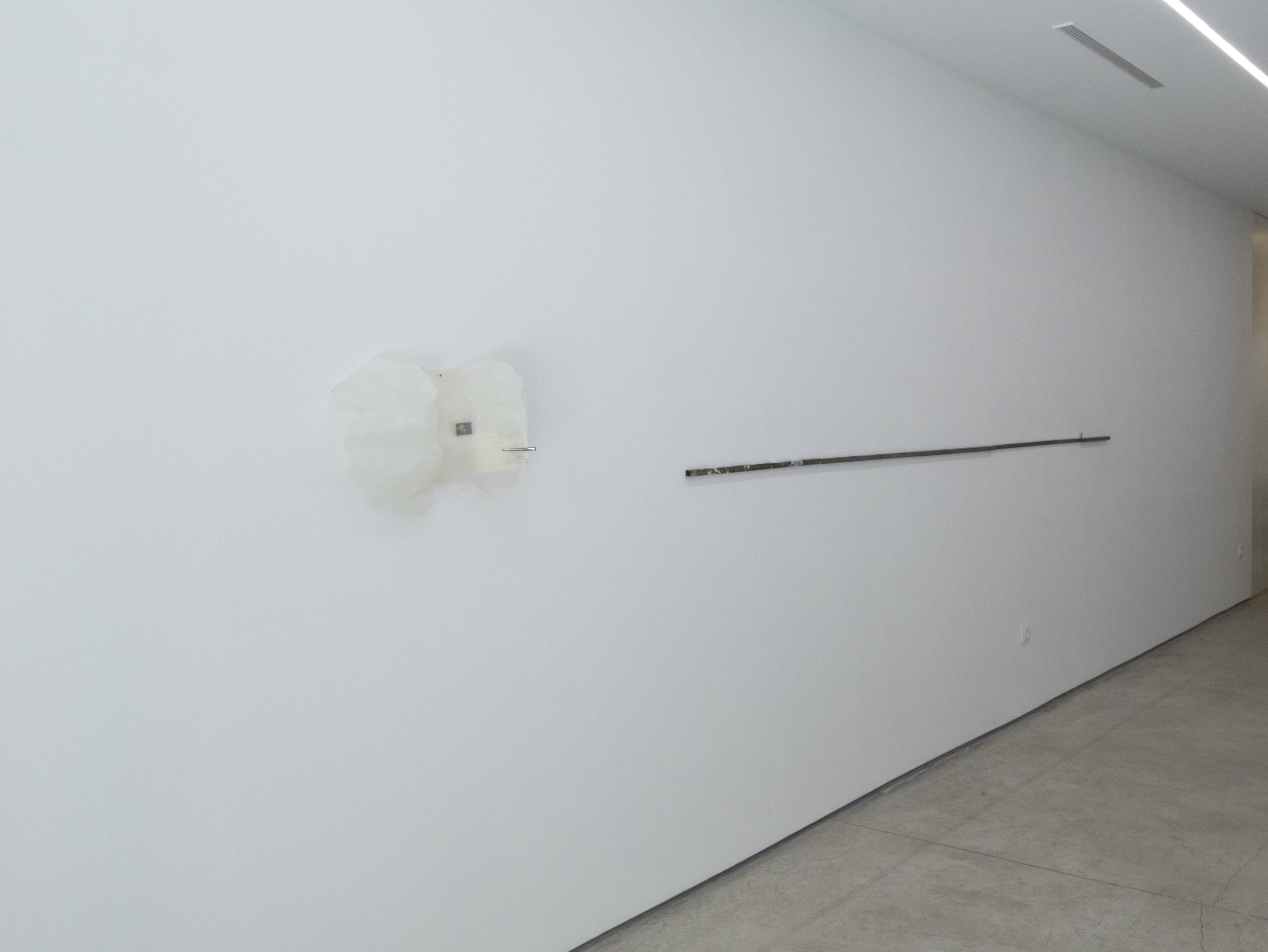
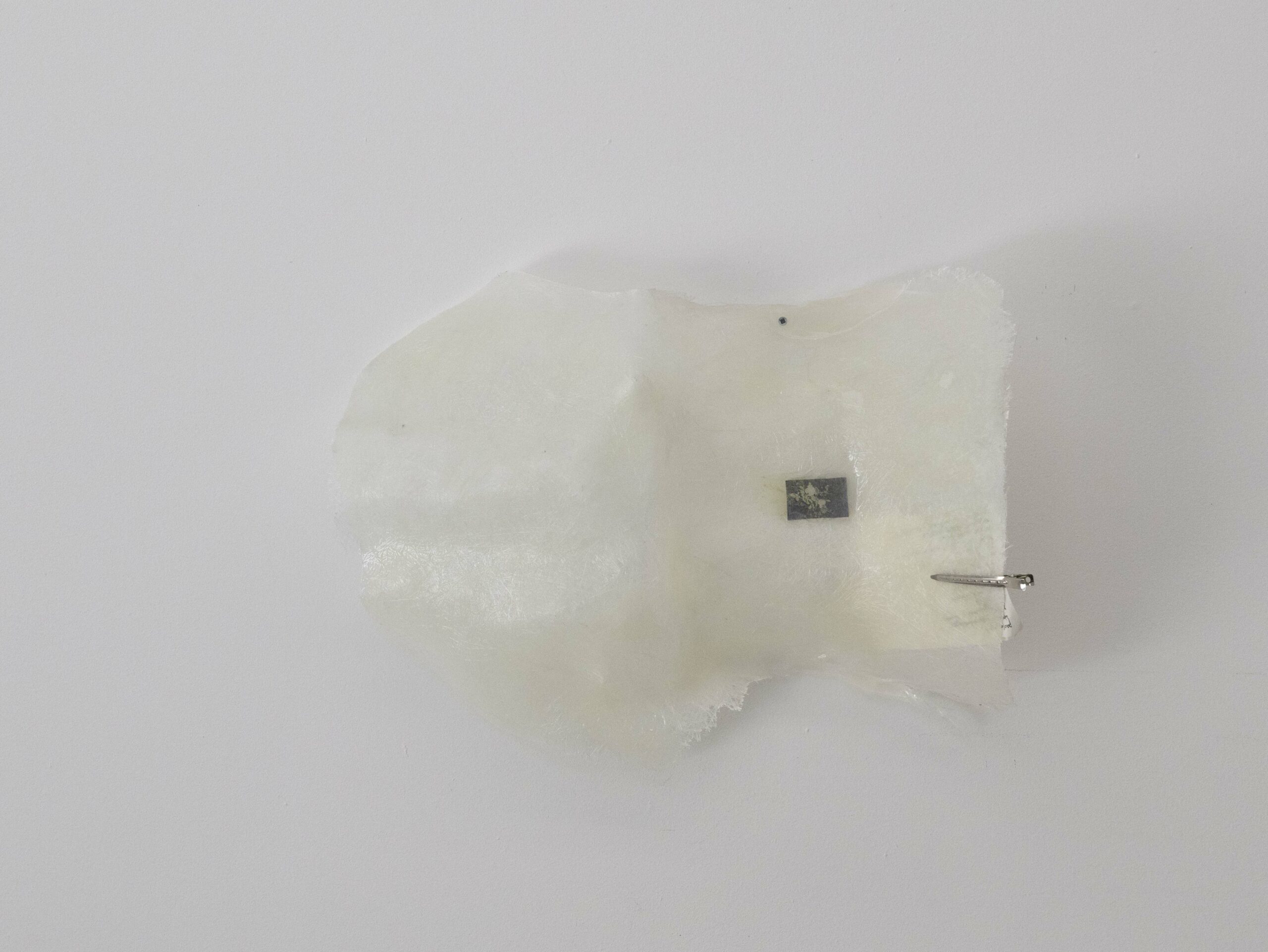
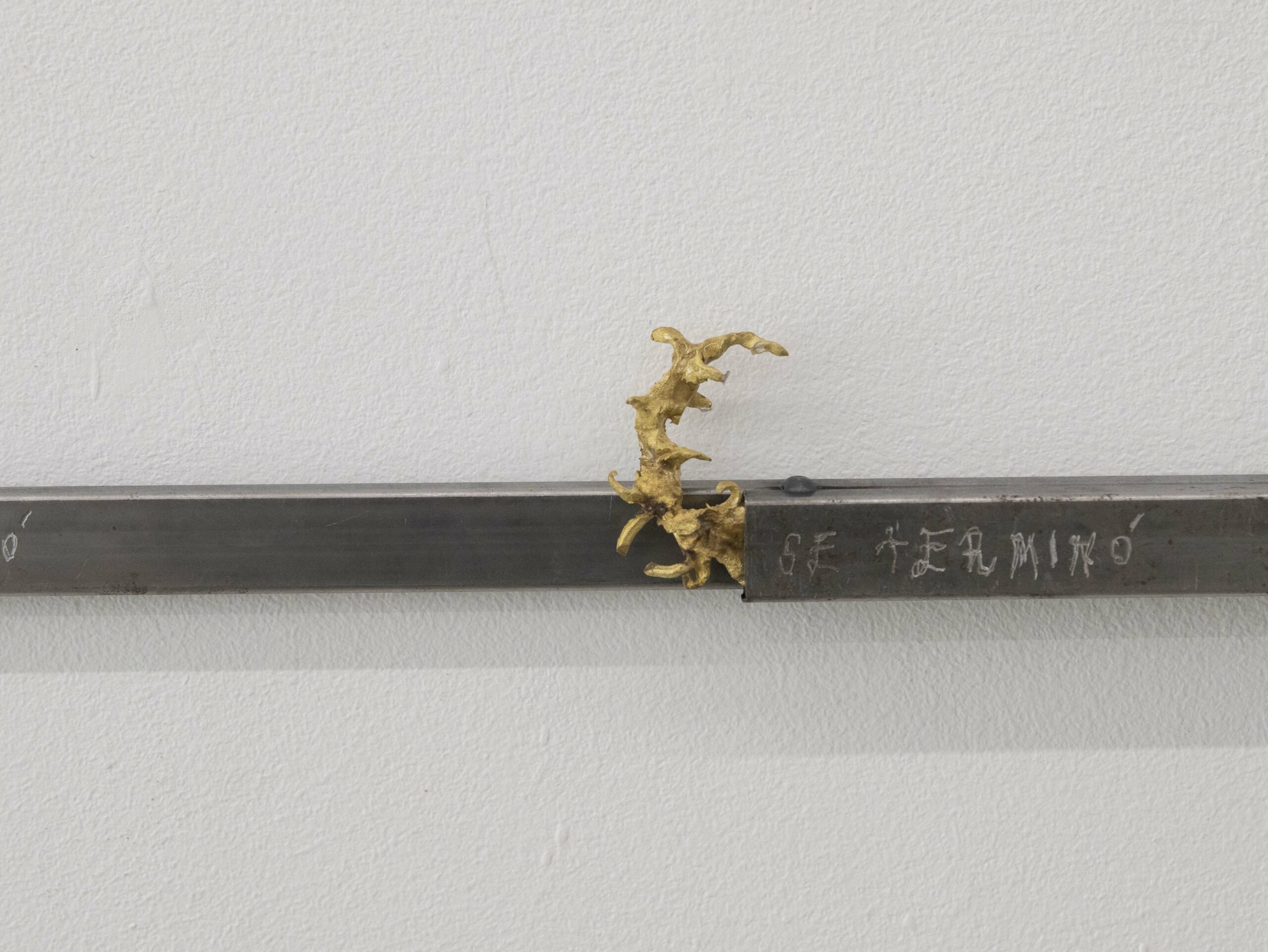
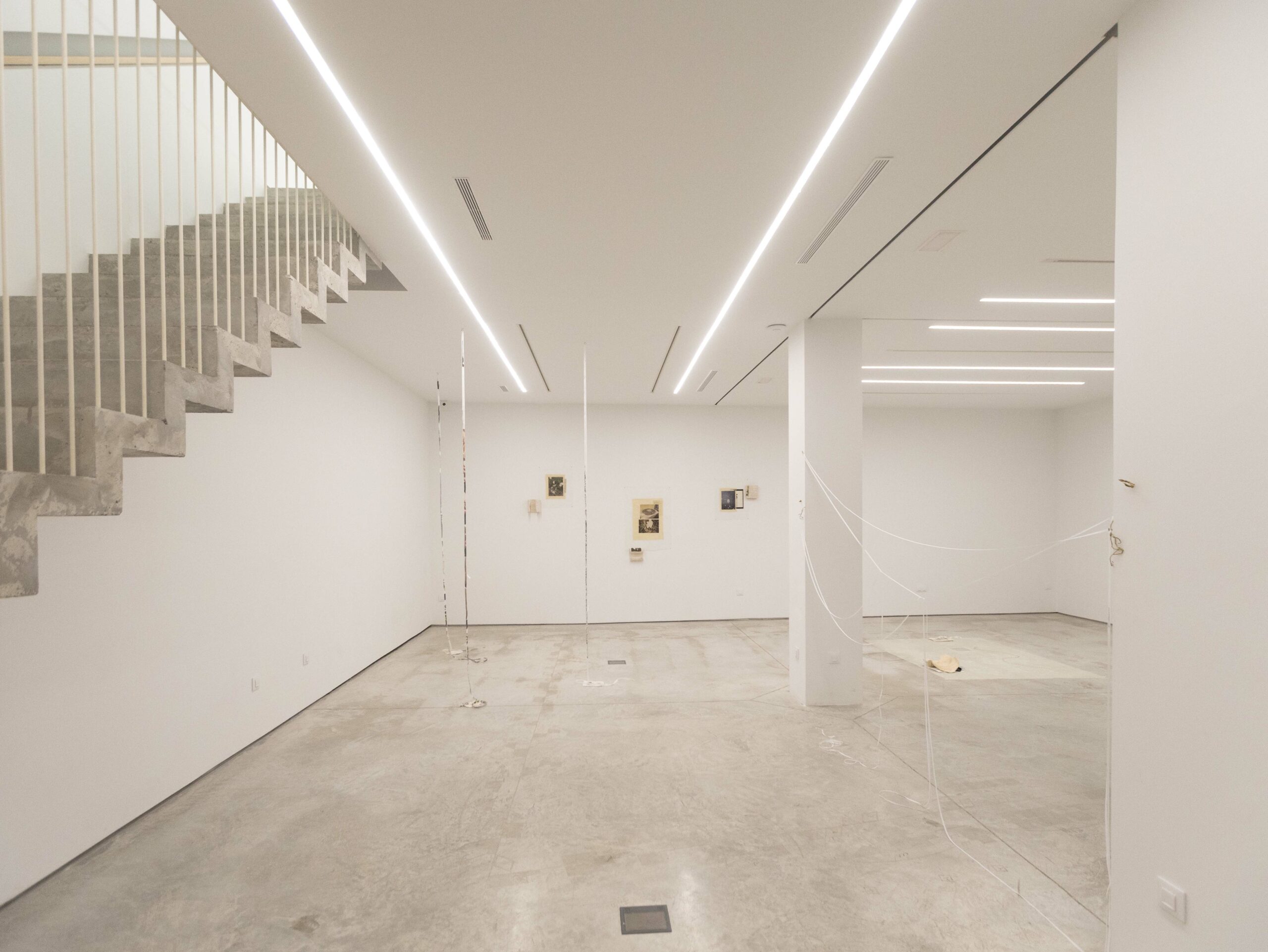
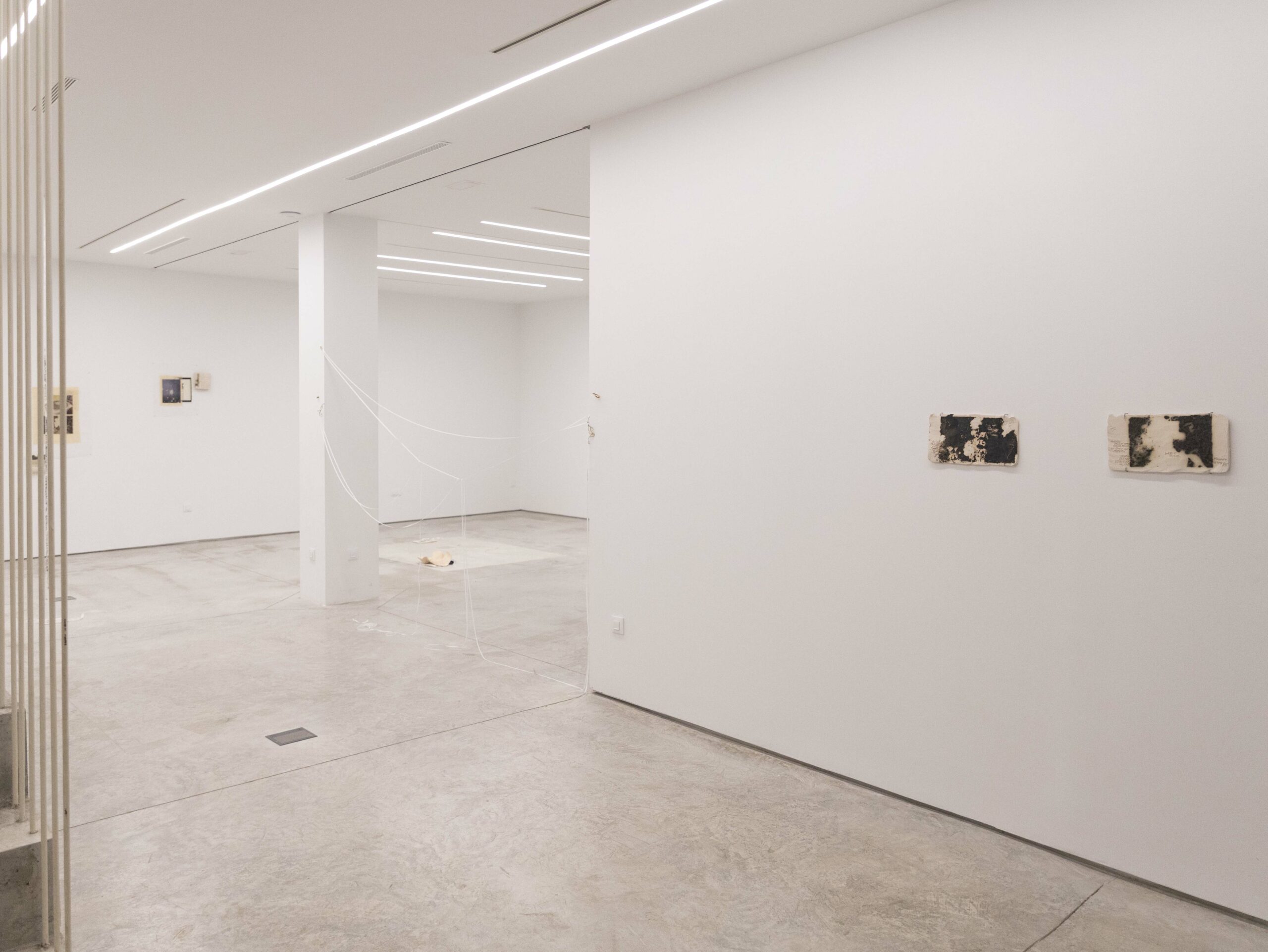
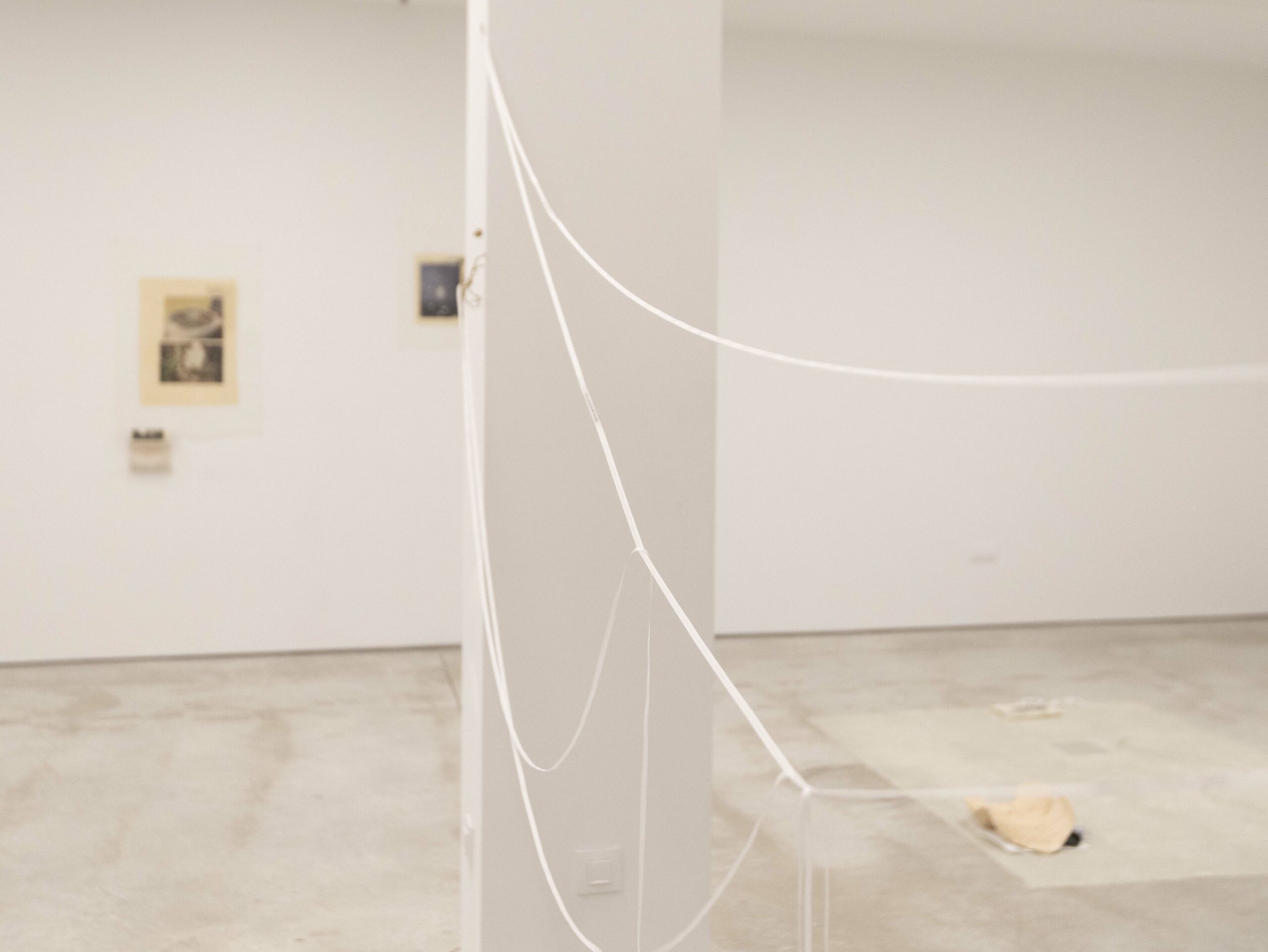
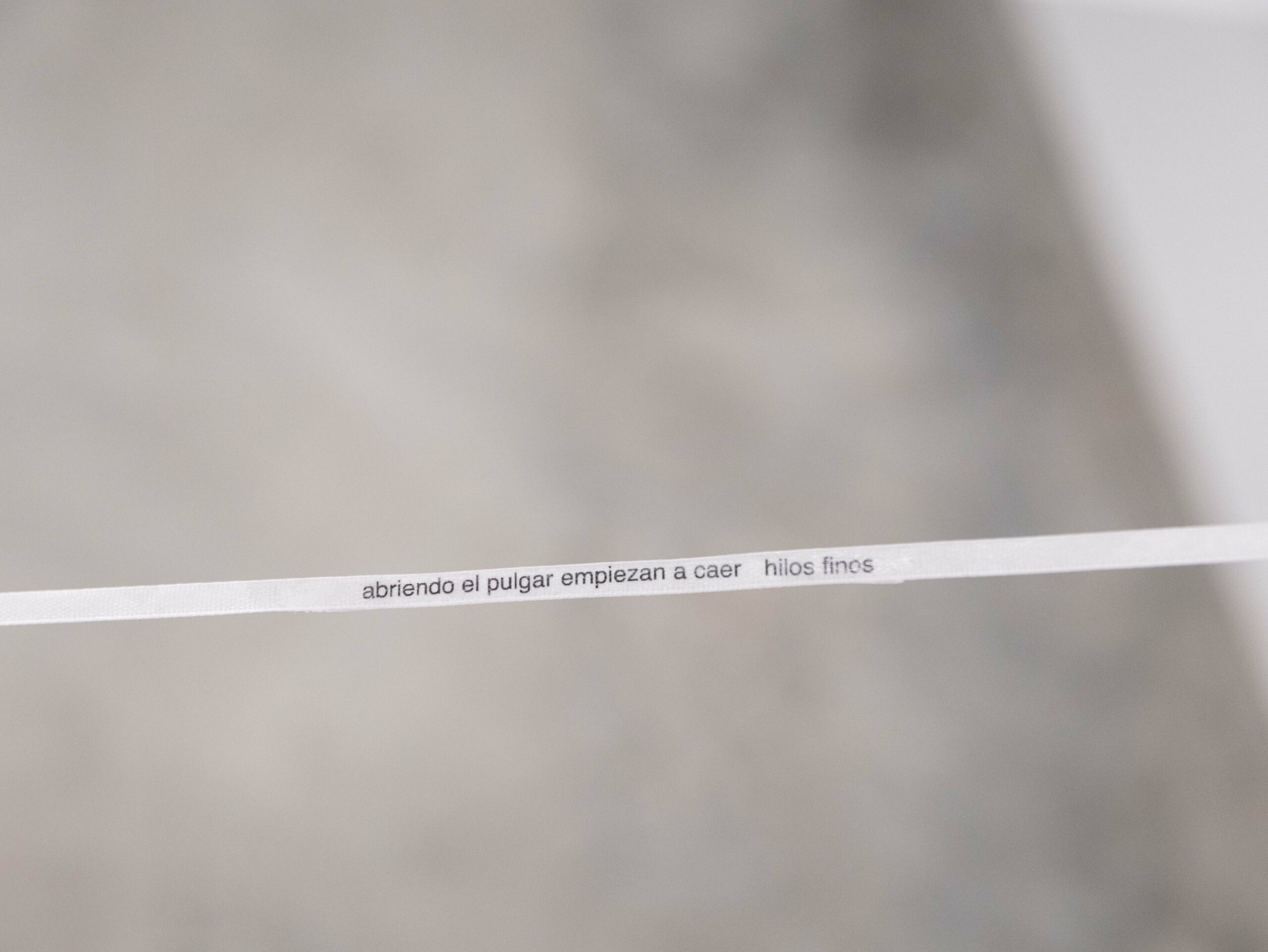
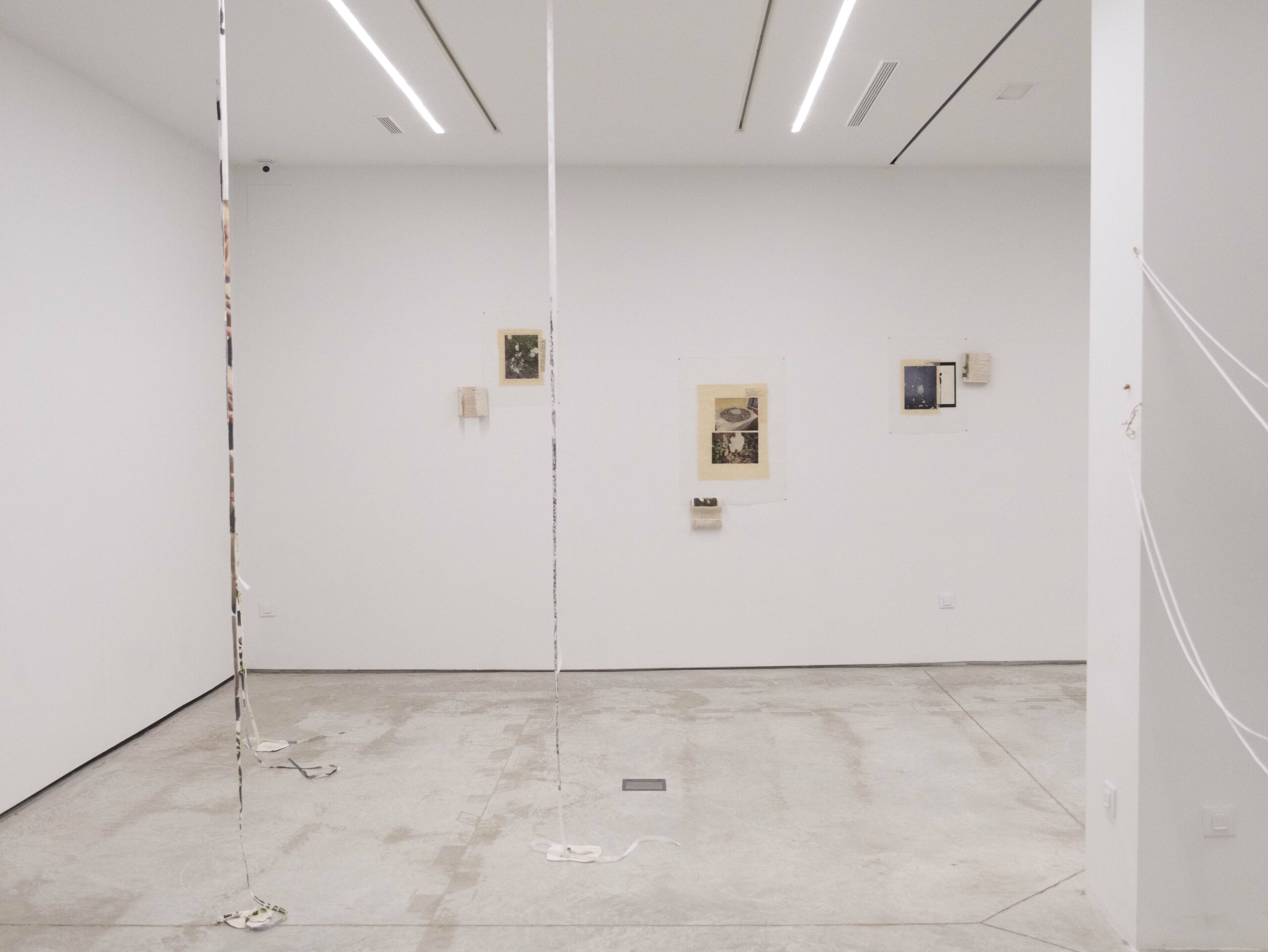
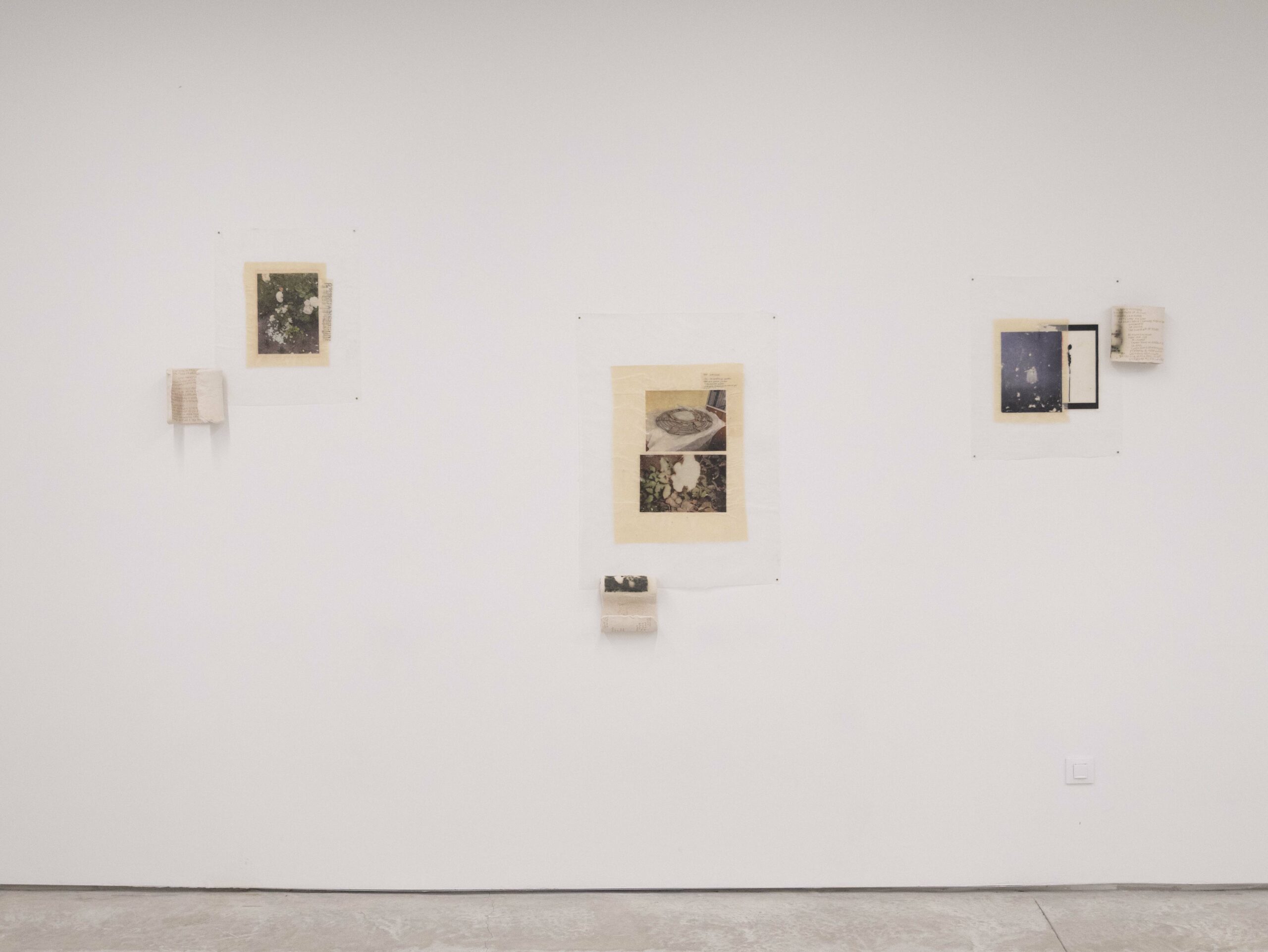
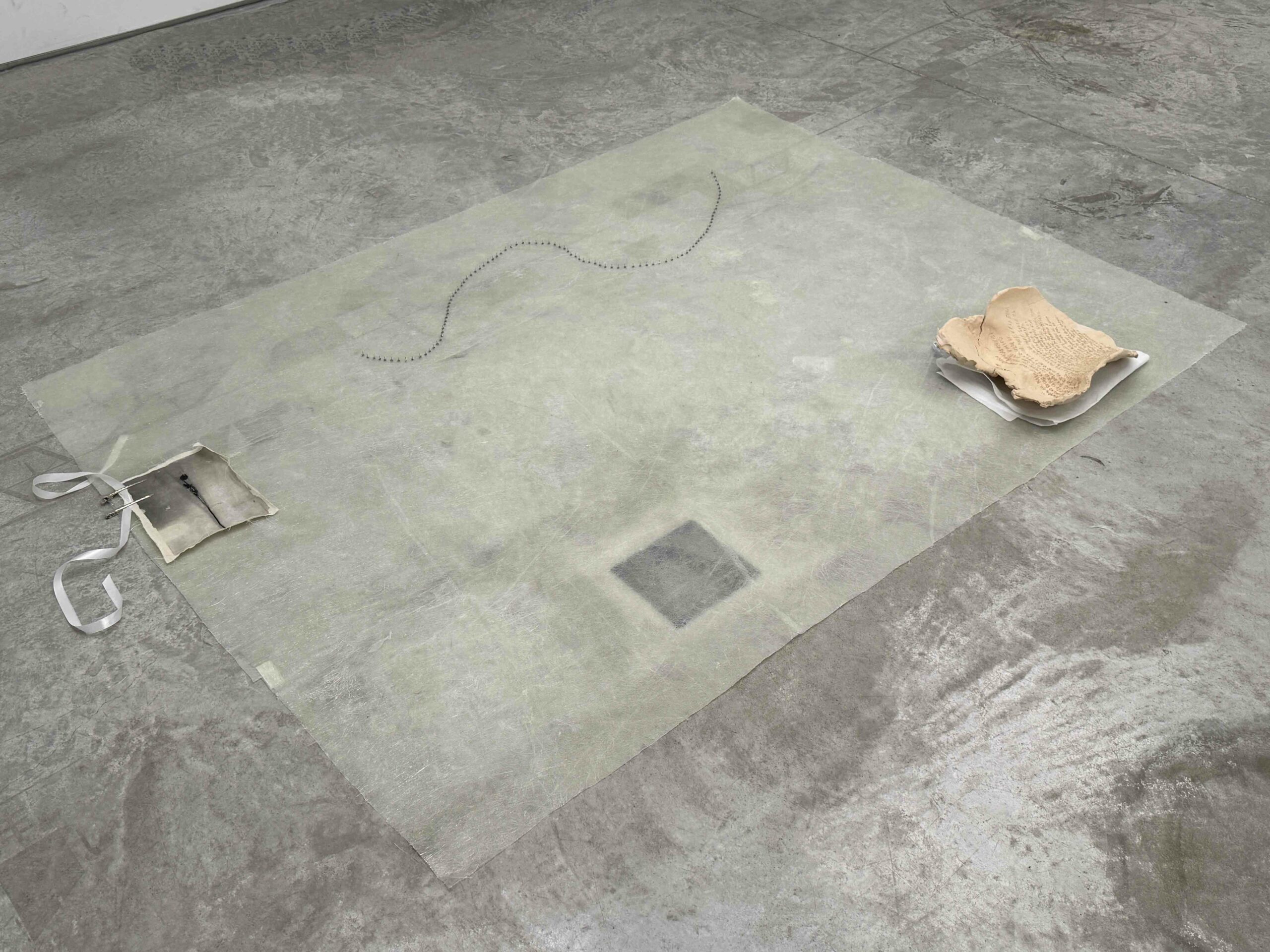
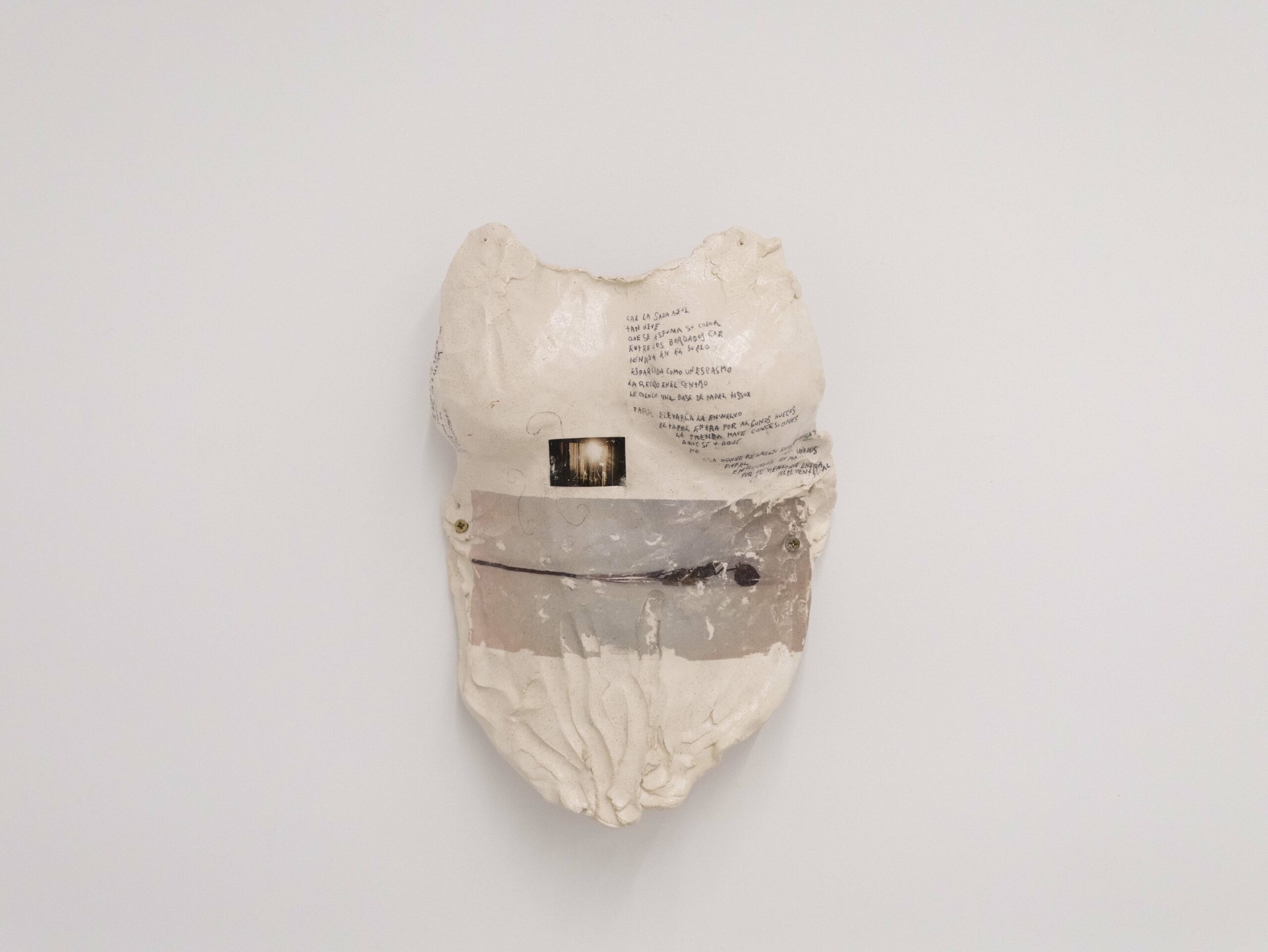
Employing a vocabulary that goes beyond the ceramics she had worked with for some time, this exhibition features fibreglass torsos that mimic skin, metal bars engraved as if with another kind of writing, fabric ribbons with transferred images and objects with new meanings. The texts that once existed only in her notebook now make their way into the works through the artist’s own handwriting incised into clay and engraved into metal. And so, writing becomes an action, a gesture of the hand as physical as kneading or stretching, and the words are imbued with that gesture. Together with them, photographs of flowers and plants taken by the artist herself are transferred directly onto the material, embodying that same fascination, now through images rather than words. What the viewer ultimately encounters is not a text to be read linearly word for word nor a photograph simply to be looked at, but rather poetry steeped in body and matter, to be experienced differently, closer to the tactile than the literary.
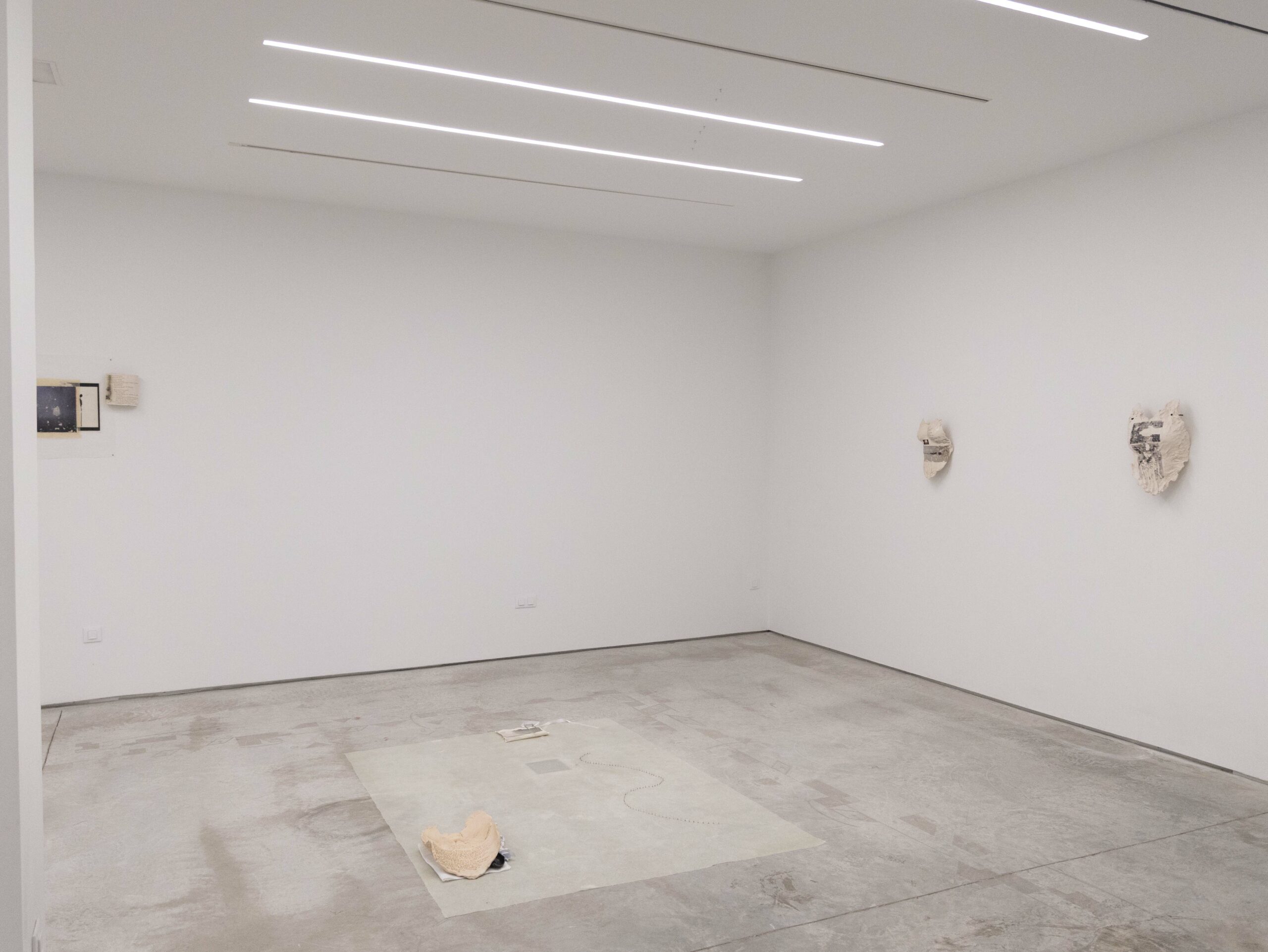
The works are distributed on the floor and on the wall. Some are leaning or almost lying down, as if they had just decided to rest there. Others hang on the wall, as if exposed like a wound or displayed like a trophy. That dual condition, what rests and what is displayed, also underpins the very act of photographing: a desire to show and, at the same time, to safeguard. Neither clay nor photography ultimately manage to hold onto anything, but the attempt, even if it fails, leaves something behind. Like the flower between the pages of that book, each piece remains there, waiting for someone to find it and, for a moment, for something of what once was to feel close again.